
High Relief in Croatian
Do you know High Relief in Croatian? How to use High Relief in Croatian and how to say High Relief in Croatian? How to write High Relief in Croatian? Now let's learn how to say High Relief in Croatian language.
High Relief translate to Croatian meanings: visoki reljef.
In other words, visoki reljef in Croatian is High Relief in English.Click to pronunce
| English | Croatian |

|
|
| High Relief | visoki reljef |
How to use High Relief in Croatian?
Meaning of High Relief in Croatian language is: visoki reljef.
Other words in Croatian
Harvests, Harmonious Function, Hide Out, Half Twelve, Hard-Boiled,
Read more Synonyms and Antonyms of High Relief
Why we should learn Croatian language?
There are many, many reasons why learning a new language is a good idea. It allows you to communicate with new people. It helps you to see things from a different perspective, or get a deeper understanding of another culture. It helps you to become a better listener. It even has health benefits, as studies have shown that people who speak two or more languages have more active minds later in life!
7 reasons to learn a Croatian language
- Makes you smarter.
- Boosts academic achievement.
- Provides professional and career advantages.
- Provides broader access to education and information.
- Gives you more social and global skills.
- Increases national security.
- Life is more interesting.
How to say High Relief in Croatian?
visoki reljef. This is your most common way to say High Relief in visoki reljef language. Click audio icon to pronounce High Relief in Croatian::
| English | Croatian |
|
|
|
| High Relief | visoki reljef |
How to write High Relief in Croatian?
The standard way to write "High Relief" in Croatian is: visoki reljef
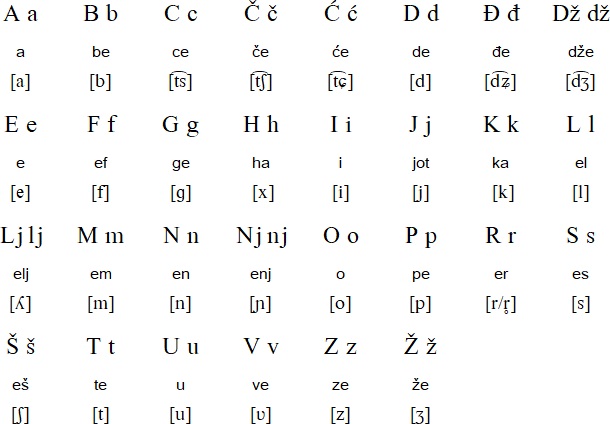
Alphabet in Croatian
About Croatian language
See more about Croatian language in here.
Croatian (/kroʊˈeɪʃən/ (audio speaker iconlisten); hrvatski [xř̩ʋaːtskiː]) is the standardized variety of the Serbo-Croatian pluricentric language used by Croats, principally in Croatia, Bosnia and Herzegovina, the Serbian province of Vojvodina, and other neighboring countries. It is the official and literary standard of Croatia and one of the official languages of the European Union. Croatian is also one of the official languages of Bosnia and Herzegovina and a recognized minority language in Serbia and neighboring countries.
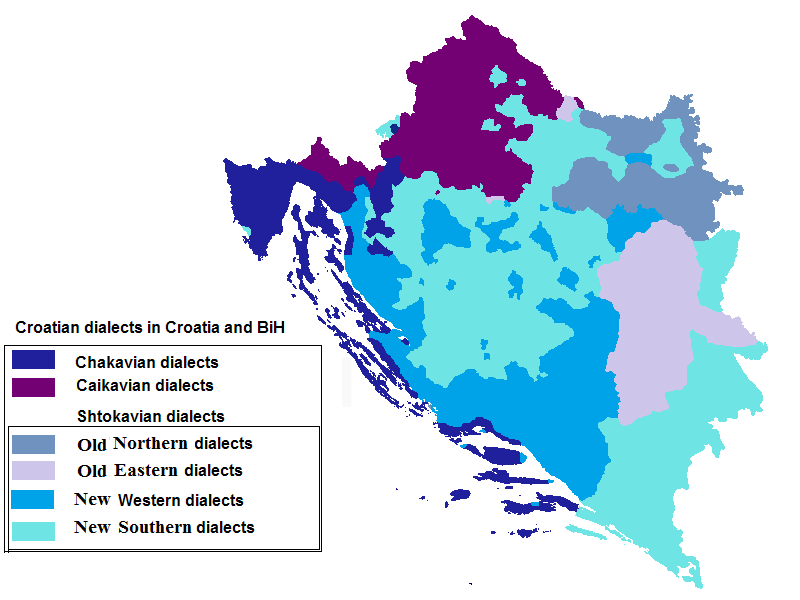
Standard Croatian is based on the most widespread dialect of Serbo-Croatian, Shtokavian, more specifically on Eastern Herzegovinian, which is also the basis of Standard Serbian, Bosnian, and Montenegrin. In the mid-18th century, the first attempts to provide a Croatian literary standard began on the basis of the Neo-Shtokavian dialect that served as a supraregional lingua franca pushing back regional Chakavian, Kajkavian, and Shtokavian vernaculars. The decisive role was played by Croatian Vukovians, who cemented the usage of Ijekavian Neo-Shtokavian as the literary standard in the late 19th and the beginning of the 20th century, in addition to designing a phonological orthography. Croatian is written in Gaj's Latin alphabet.
Besides the Shtokavian dialect, on which Standard Croatian is based, there are two other main dialects spoken on the territory of Croatia, Chakavian and Kajkavian. These dialects, and the four national standards, are usually subsumed under the term "Serbo-Croatian" in English, though this term is controversial for native speakers, and paraphrases such as "Bosnian-Croatian-Montenegrin-Serbian" are therefore sometimes used instead, especially in diplomatic circles.
.Writing system in Croatian
Latin (Gaj's alphabet), Yugoslav Braille
Croatian Speaking Countries and Territories
Croatian Speaking Countries and Territories: Croatia, Bosnia and Herzegovina (co-official), Serbia (in Vojvodina), Austria (in Burgenland), European Union.
Croatian native speakers
Croatian native speakers: (5.6 million, including other dialects spoken by Croats cited 1991–2006).
Croatian language code
Croatian language code is: hr.
Conclusion on High Relief in Croatian
Now that you have learned and understood the common ways of saying High Relief in Croatian is "visoki reljef", it's time to learn how to say High Relief in Croatian. This will hopefully give you a little motivation to study Croatian today.
visoki reljef in Croatian meanings High Relief in English.